

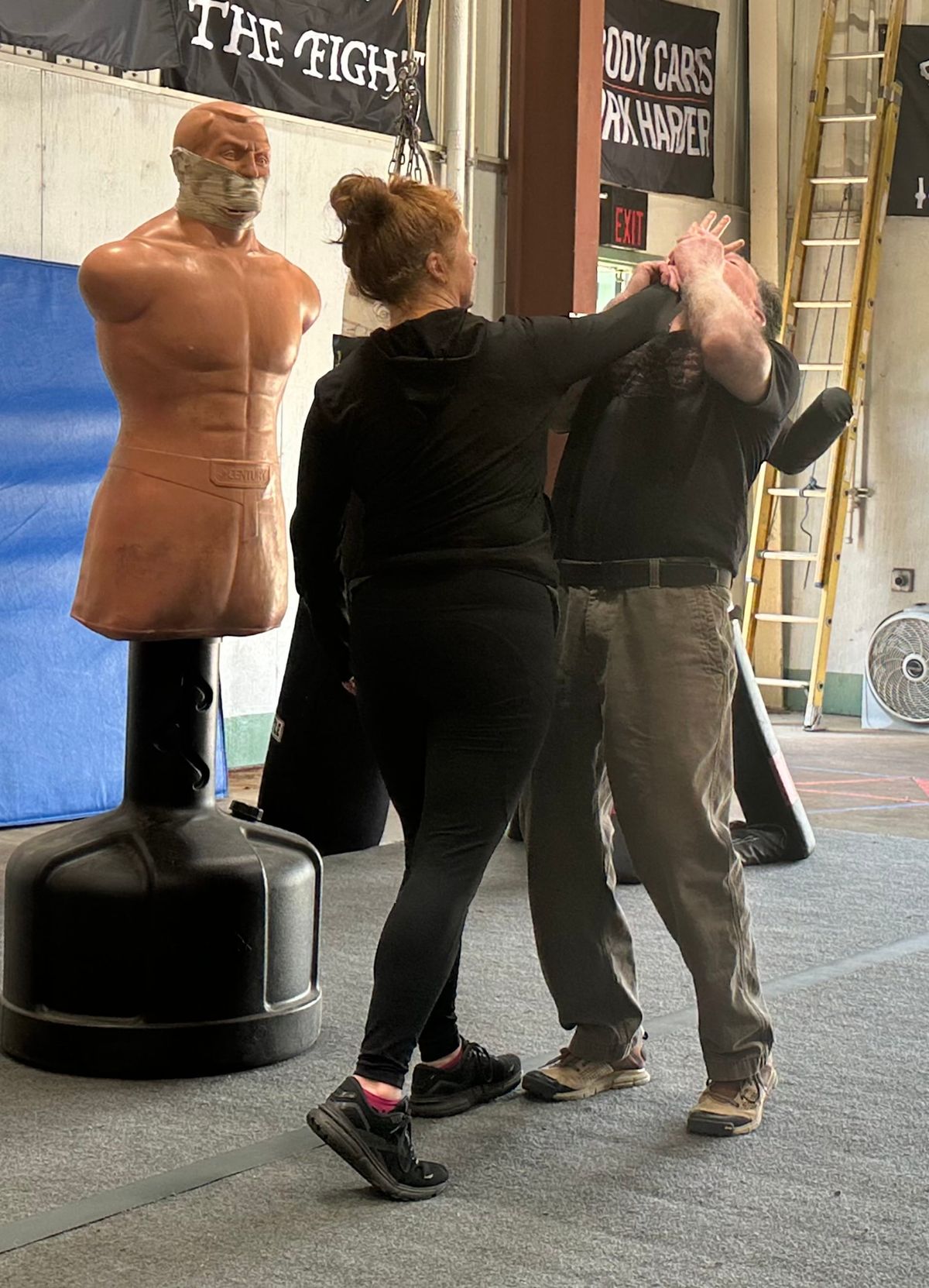
A new student is standing across from a training partner who’s been given one job. Keep walking toward them. The student says, “Hey, man, I don’t want any trouble,” and takes a step back. Their partner takes another step forward. The student backs up again and says the same thing, a little faster this time. By the time I stop the drill, they’ve given up half the room. I ask them where they were going. Most people have to turn around to see.
That’s where I like to start. The student knew how to step backward. They knew how to talk. What they hadn’t done was decide where they wanted to go. And once somebody was close enough to make them uncomfortable, that person got just about all of their attention. I understand that. Give me somebody walking right at me and I’m probably going to spend the first second looking at him, too. The part worth practicing is what I do with the next second.
I’ll have them run it again at a walk. This time I’ll ask them to tell the other person what they want. “Stop right there” will do. Say it so the person can hear it. That can feel rude as hell the first time you do it, especially when the person in front of you hasn’t touched you and is acting like you’re the one making it weird. That’s one reason I want people to practice saying it out loud in class. There’s a difference between knowing what you’d say and hearing yourself say it to somebody who’s still coming.
Then we give them somewhere to go. Sometimes it’s as simple as pointing out the open floor they passed on the way to the wall. On the next pass they can move toward that space while they talk. I’ll stop the drill and ask what they saw. Sometimes they’ll tell me they finally noticed the door. Sometimes they’ll tell me they saw it the first time and figured they had to stay in front of their partner because we were doing a Krav drill. Fair enough. If I put two people across from each other on a mat, I can see how they’d think I wanted them to stand there until somebody threw a punch.
One of my favorite ways to run this is to let the training partner stop when the student tells them to. You’d be surprised how often the student stops, too. Now both people are standing there looking at each other, and the student has a perfectly good route out. I’ll ask, “What are you waiting for?” Usually they laugh and walk off. That’s a good rep. If the other person gives you the room you asked for, go ahead and use it. You can get on with your evening without finding out how the rest of the conversation would have gone.
We’ll hit pads in that first class. I want a beginner to feel what it’s like to hit something solid, and over time I want them to be able to do it when the timing is somebody else’s. But if they go home remembering one thing from day one, I hope it’s the moment they told somebody to stop and realized they could leave without waiting for an answer. That’s something they can use before they ever have to find out how good their punch is.