Ed Manifesto with SEREPICK
By Jerry • Sentinel Combatives
Atlanta, Georgia • 7–8 November 2026
Executive Summary
This was a two-day course on lock entry and bypass. I found it incredibly useful and would recommend it as a starting point for anyone who wants to learn how locks and access systems work. The course began with individual lock mechanisms and then widened the discussion to doors, electronic access control, and the information people give away as they move through an urban environment.
My civilian use case is a family of four traveling away from home when an emergency disrupts their plans. Their vehicle is no longer a viable option, and they need to get out of danger and off the street. I took the course with that problem in mind. Understanding access helps me think through what happens when the place I planned to use is unavailable and the family needs another option.
Course Breakdown
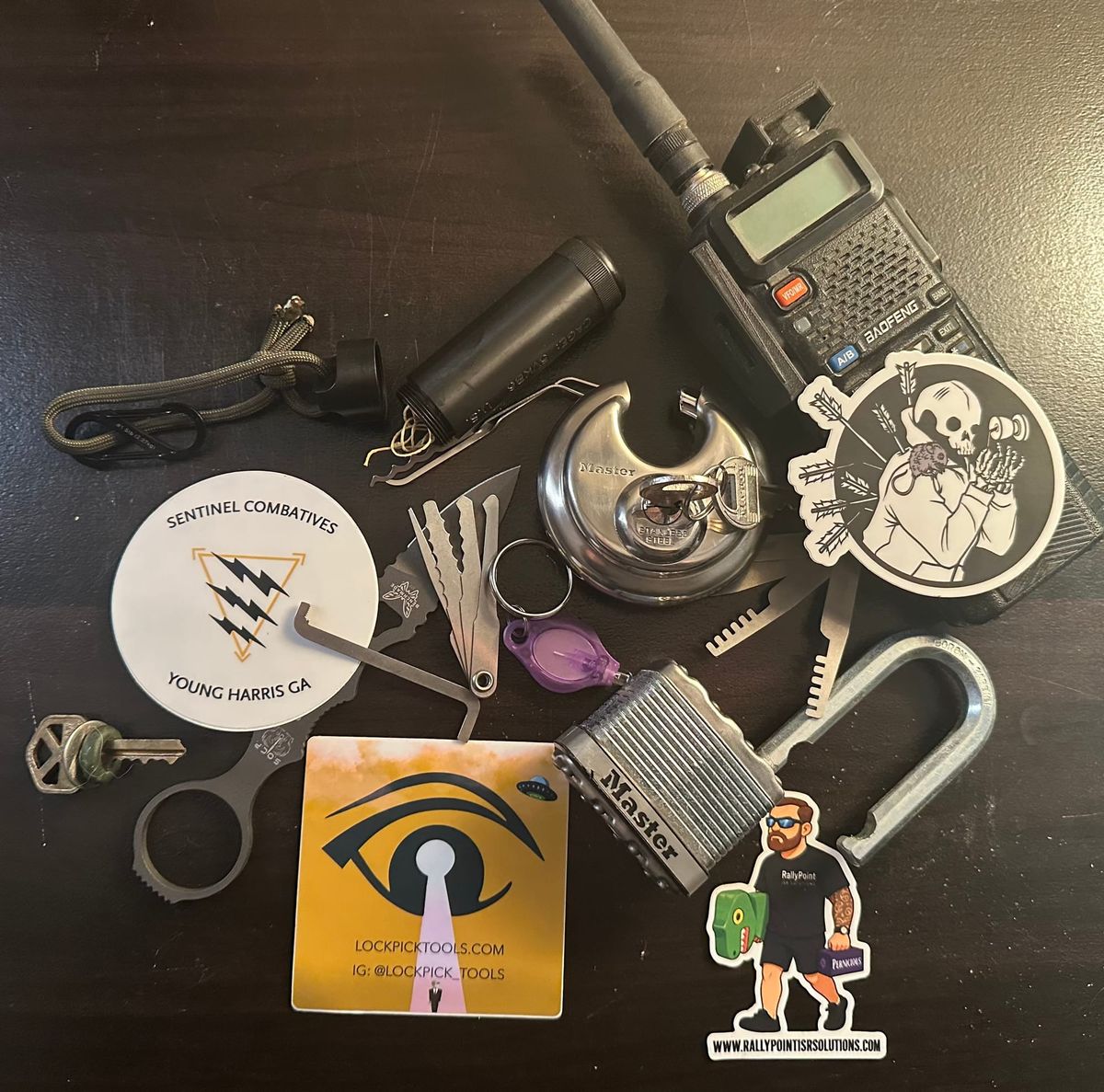
Day 1 covered common keying, wafer and pin tumbler locks, keyed and combination padlocks, lockboxes, and keypad examples. The slides and classroom hardware made it easier to see the differences between locks that look similar from the outside. The main lesson I took from the first day was to identify the mechanism before making assumptions about the protection it provides. What we saw on a particular training lock depended on its design and construction.
Day 2 moved from the lock to the door and the system around it. We covered latches, frames, exit hardware and sensors, electronic safes, and badge-based access control. The discussion also covered signature management, including what people reveal through clothing, badges, vehicles, devices, and public posts. A public traffic camera shown alongside a map was a good example of how information already available to a traveler can help answer a specific question about a route.
Summary and Personal Thoughts
The best part of the course for me was learning to look at an access problem as a whole. A lock is one part of a door. The frame, the hardware on the other side, the electronics, and the way people use the building all matter. The Day 2 discussion on the anatomy of access gave me a way to think through that problem. Start with what you need, identify what stands between you and it, and decide what options you have. That applies just as well when the thing you need is a safe place for your family to wait.
Picture two parents and two kids in an unfamiliar city. The roads are blocked, their vehicle is out of the plan, and they have to move on foot. One parent may need to find out what’s happening while the other keeps the kids together. They need a destination the whole family can reach, a way to get in with permission, and enough information to decide how long to stay. A staffed hotel lobby, an open business, or a designated shelter might solve the immediate problem. If the first place is closed or unsuitable, they need another option. Once inside, they still have to account for everyone, identify usable exits, check in with a trusted contact, and decide when and where to move next.
That’s where I see the course fitting into civilian preparedness. Knowing how access systems work helps me assess the places my family depends on, from our own home to a hotel room. It also helps me ask better questions when a plan falls apart. Can we reach the alternate location with the kids? Who can let us in? Can we leave safely if conditions change? Those questions connect this material to route planning, communications, and family decision-making.
Constructive Items to Think About
My follow-on would be to practice two things. First, spend time with owned training hardware so I can recognize the mechanisms and explain how they differ. Second, rehearse the family scenario somewhere unfamiliar, with a planned refuge that turns out to be unavailable. Work through the decision to leave the vehicle, move together, obtain authorized access to an alternate location, and arrange onward travel. I’d judge that exercise by whether everyone stayed accounted for and the parents could explain when they changed the plan and why.